Green Minds, Creative Solutions to Business Challenges
Responsible business considers society, economy and environment, promoting comprehensive sustainable development for current and future generations.
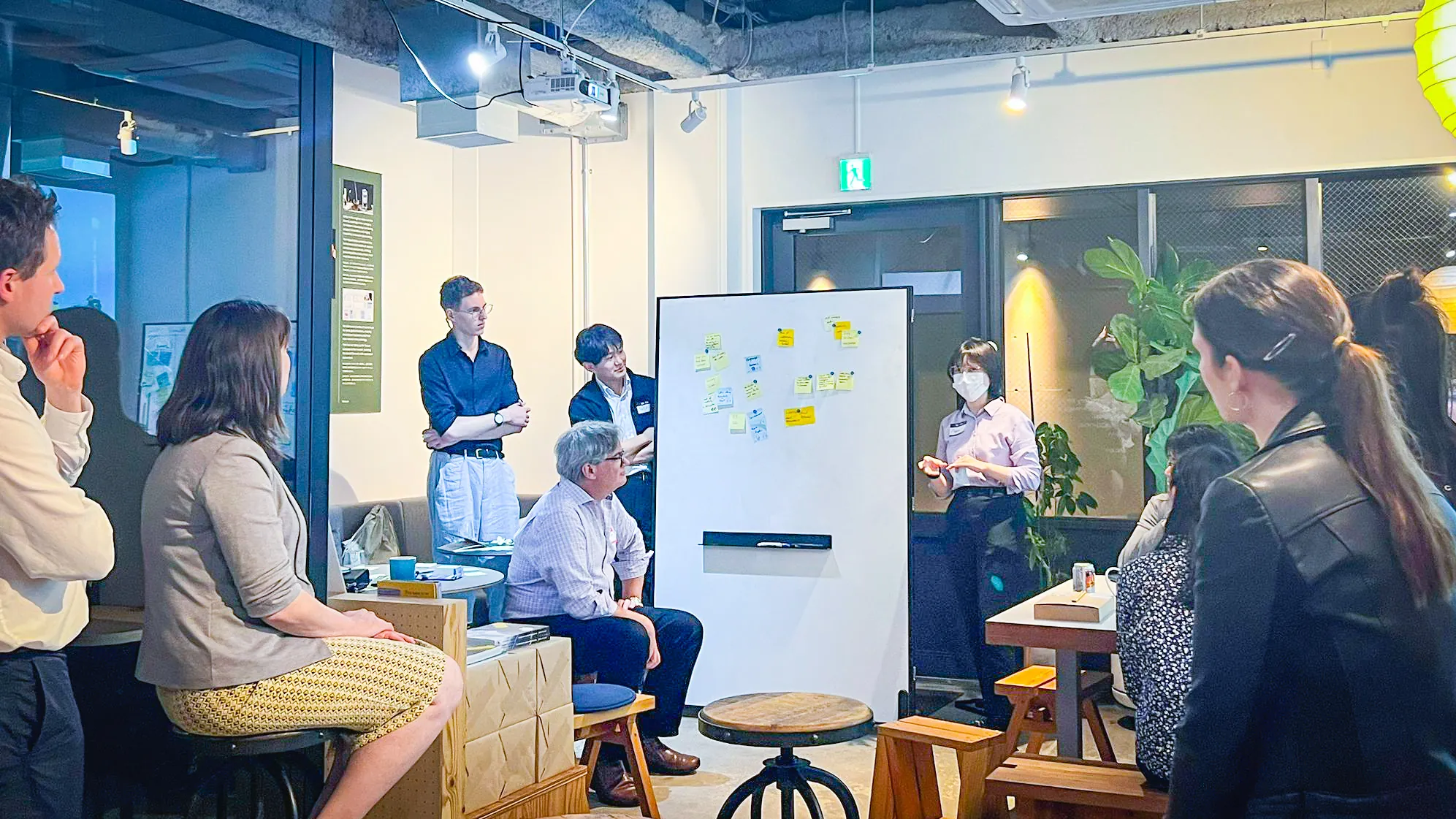
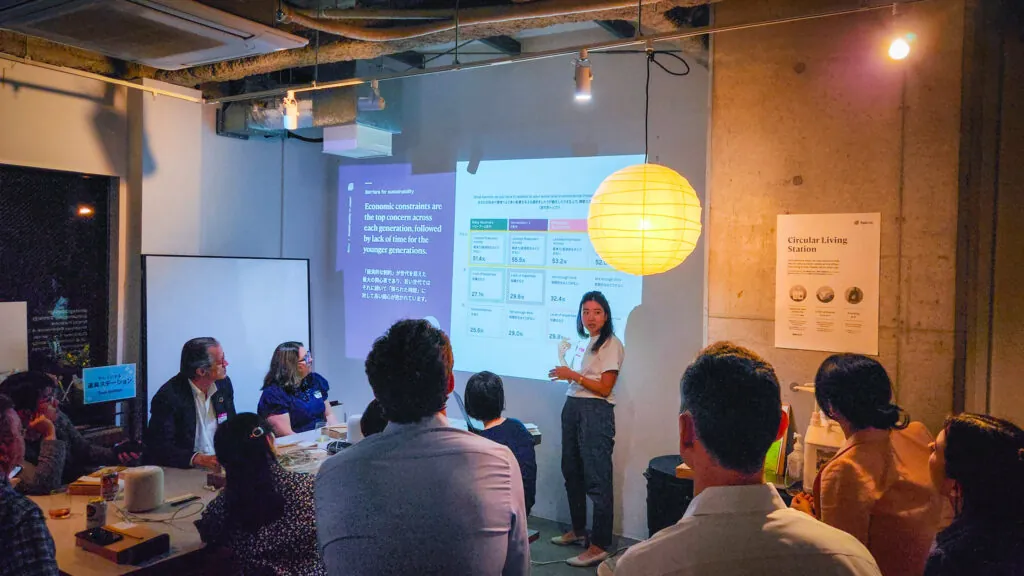
With this concept front of mind, British Chamber of Commerce in Japan members and guests delved into the approaches of regenerative business and sustainability in practice at an interactive event hosted by strategic design and sustainability consultancy Fabric, in May.
Entitled “Green Minds, Creative Solutions,” the session was led by Fabric’s Dr. Stefanie Di Russo, strategic design director; Hasumi Nemani, sustainability strategist; and Tomoko Saigan, sustainability strategist.
Di Russo began by introducing attendees to Fabric, a “purpose-driven organisation with a mission that delivers human insight and practical innovation to help businesses scale and thrive.”
With an open-door policy, the company’s Nakameguro office hosts a library, a “kirei (clean) station” where the lifecycle of items such as glasses, smartphones and sneakers are extended through repair, and the occasional “free” market. It also features a recycling system that encourages employees to properly dispose of their waste and a worm farm that breaks down food waste into compost. Staff and visitors can even bring containers to top up on household cleaning products like detergent, thereby reducing their purchase of plastic items.
“We try to live and breathe as much sustainability as we can,” she said, adding that the practice is a core part of Fabric’s identity.
Regenerative business
The idea of regenerative business comes from agriculture, explained Nemani, noting that farming with crop productivity and financial value at its core results in negative effects on people, planet and profit in the long run. These include reduced soil and water quality due to mono crops and pesticide use, loss of biodiversity and health issues for the farmer.
Regenerative farming, however, “values the ecosystem as a whole” by working the land responsibly and allowing ecosystems and communities to thrive while still providing crops.
In a business context, three core principles underpin a regenerative business:
- benefiting multiple stakeholders
- valuing success using a plural capital framework
- driving a paradigm shift in societal values.
“It is paramount to design a business where the more profitable it is, the more positive impact it has on society and environment,” she said.
The road to this kind of business begins with sustainability transformation: a comprehensive change process that organisations, cities and governments undertake to integrate sustainability into their core strategies and operations. But the path is not always easy; there can be growing pains.
Nemani introduced the four phases of sustainability transformation:
- conventional (a CSR-dominant paradigm where sustainability is not the core part of the company’s agenda)
- “green” (the beginnings of a business embracing sustainability as a source of advantage)
- sustainable (sustainability is a core driver of value-creation but not integrated completely; employees are empowered with relevant understanding and the company is going beyond reducing negative impacts to creating positive impacts)
- restorative/regenerative (positive impact is woven into the core of the business model and reflected in the brand’s identity).